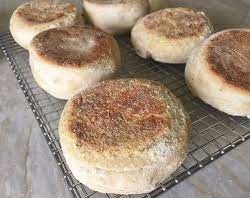
There’s something truly special about homemade sourdough English muffins. Their golden crust, soft interior, and signature airy pockets create the perfect breakfast bread for butter, jam, honey, or breakfast sandwiches. Unlike store-bought versions, homemade English muffins have a deeper flavor, softer texture, and rich sourdough aroma that transforms a simple breakfast into something unforgettable.
These soft sourdough English muffins are cooked on a skillet instead of baked in the oven, giving them their classic texture and beautifully toasted exterior. The long fermentation process develops a mild tangy flavor while creating a light and fluffy crumb filled with those iconic nooks and crannies everyone loves.
Whether you enjoy them toasted with melted butter, layered with eggs and cheese, or topped with homemade jam, these skillet-cooked sourdough muffins are one of the most rewarding sourdough recipes you can make at home.
This recipe is also an excellent way to use your active sourdough starter while exploring traditional fermentation baking techniques. Once you master these homemade English muffins, they’ll quickly become a staple in your kitchen.
Why Homemade Sourdough English Muffins Taste Better
Fresh sourdough English muffins offer a flavor and texture that packaged muffins simply cannot match.
Naturally Fermented Flavor
The sourdough starter slowly ferments the dough overnight, creating:
- Mild tanginess
- Rich depth of flavor
- Better aroma
- Improved texture
Unlike quick commercial yeast recipes, sourdough fermentation gives the muffins a more complex and satisfying taste.
Soft Interior with Signature Air Pockets
One of the best features of homemade English muffins is their texture.
These muffins become:
- Light and fluffy
- Tender inside
- Slightly chewy
- Filled with airy pockets
Those classic “nooks and crannies” hold melted butter perfectly.
Cooked on a Skillet for Authentic Texture
Traditional English muffins are cooked on a griddle or skillet rather than baked entirely in the oven.
This cooking method creates:
- Golden crust
- Soft center
- Even browning
- Signature texture
A cast iron skillet works especially well because it distributes heat evenly.
What Makes Sourdough English Muffins Unique?
English muffins differ from regular bread rolls in several important ways.
They are:
- Cooked slowly on a skillet
- Lower in height
- Soft yet chewy
- Split instead of sliced
- Full of texture inside
The sourdough version adds even more flavor complexity while improving texture naturally.
Benefits of Using Sourdough Starter
Sourdough baking continues to grow in popularity because of its flavor and natural fermentation benefits.
Better Digestibility
The fermentation process may help break down:
- Starches
- Gluten proteins
- Naturally occurring compounds in flour
Many people find sourdough breads easier to digest than conventional breads.
Richer Taste Without Additives
Sourdough naturally develops flavor over time without artificial ingredients or preservatives.
This creates:
- Fuller flavor
- Better aroma
- More satisfying texture
Excellent Use for Active Starter
If you maintain a sourdough starter, English muffins are a wonderful alternative to traditional bread loaves.
They require:
- Simple ingredients
- Minimal shaping
- No oven spring techniques
making them beginner-friendly while still delivering bakery-quality results.
Essential Ingredients Explained
Every ingredient contributes to the texture and flavor of these homemade sourdough English muffins.
All-Purpose Flour
All-purpose flour provides:
- Soft structure
- Tender crumb
- Balanced chewiness
It creates muffins that are sturdy enough for sandwiches while remaining soft inside.
Water
Water hydrates the flour and helps activate fermentation.
Room-temperature water works best because it creates a comfortable environment for the sourdough starter.
Some bakers also substitute milk for a richer flavor and softer texture.
Active Sourdough Starter
A bubbly active starter is the heart of the recipe.
An active starter provides:
- Natural rise
- Flavor development
- Light texture
- Fermentation strength
Weak starter can lead to dense muffins with poor rise.
Honey
Honey adds:
- Mild sweetness
- Better browning
- Flavor balance
- Moisture retention
It complements the slight tanginess of the sourdough beautifully.
Salt
Salt enhances flavor while helping strengthen the dough structure.
Without salt, the muffins may taste bland.
Baking Soda (Optional)
Baking soda can be added after fermentation to:
- Encourage additional lift
- Create lighter texture
- Speed up final rise
While optional, it helps produce fluffier English muffins.
Coconut Oil
Coconut oil prevents sticking while adding subtle richness during cooking.
It also helps create a beautifully golden crust on the skillet.
Why Overnight Fermentation Matters
One of the biggest secrets to flavorful sourdough English muffins is the overnight ferment.
During this resting period:
- Wild yeast develops flavor
- Air pockets form
- Dough structure improves
- Texture becomes lighter
This slow fermentation creates the classic sourdough character people love.
Step-by-Step Guide to Homemade Sourdough English Muffins
Step 1: Mixing the Dough
The night before cooking, combine:
- Flour
- Water
- Active sourdough starter
Mix until fully combined into a shaggy dough.
The dough should feel:
- Sticky
- Thick
- Slightly elastic
Cover the bowl and allow it to ferment overnight.
Fermentation Timing
The dough typically ferments for:
- 8–12 hours depending on temperature
A warm kitchen speeds up fermentation, while cooler temperatures slow it down.
The dough should appear:
- Puffy
- Bubbly
- Expanded
Step 2: Add Remaining Ingredients
The next day, stir in:
- Honey
- Salt
- Baking soda (if using)
Mix thoroughly until evenly incorporated.
At this stage, the dough becomes softer and easier to shape.
Adjusting Dough Consistency
Depending on:
- Humidity
- Flour type
- Starter hydration
you may need a little extra flour.
The dough should remain soft but manageable.
Avoid adding too much flour, as dry dough can create dense muffins.
Preparing the Skillet
A properly heated skillet is essential.
Preheat a:
- Cast iron skillet
- Flat griddle
- Non-stick skillet
over medium-high heat.
Lightly grease with coconut oil to prevent sticking.
Why Cast Iron Works Best
Cast iron provides:
- Even heating
- Better browning
- Stable temperature
- Authentic texture
This creates English muffins with beautifully golden surfaces.
Shaping the Muffins
Divide the dough into 12 equal portions.
Shape gently into rounds.
Because the dough is soft, lightly floured hands make handling easier.
There’s no need for perfection — rustic shapes still cook beautifully.
Cooking the Muffins
Place the dough portions onto the hot skillet.
Immediately reduce the heat slightly to encourage gradual rising and even cooking.
This slower cooking process helps:
- Cook the centers fully
- Prevent burning
- Develop texture
- Create soft interiors
Watching for Proper Rise
As the muffins cook, they should:
- Puff slightly
- Expand
- Become airy
Patience is important during this stage.
Cooking too quickly can burn the outside before the center cooks through.
Flipping the Muffins
Once the bottoms become golden brown, carefully flip each muffin.
Cook the second side until:
- Golden
- Fully cooked
- Lightly crisp outside
The muffins should feel light and springy when finished.
Cooling and Serving
Transfer finished muffins to a wire rack.
Allow them to cool slightly before splitting.
For authentic texture:
- Use a fork to split them open instead of a knife
This preserves the classic nooks and crannies inside.
Best Ways to Enjoy Sourdough English Muffins
These homemade muffins are incredibly versatile.
Breakfast Sandwiches
Fill with:
- Eggs
- Cheese
- Bacon
- Sausage
- Avocado
Toasted with Butter
A classic favorite.
The crispy edges and soft center pair perfectly with melted butter.
Jam and Honey
Top with:
- Strawberry jam
- Orange marmalade
- Honey
- Peanut butter
for a delicious breakfast.
Mini Pizzas
Use split English muffins as a base for homemade mini pizzas.
Tips for Perfect English Muffins
Use an Active Starter
A bubbly starter creates the best rise and flavor.
Keep Heat Moderate
Cooking too hot burns the exterior before the inside finishes.
Don’t Rush Fermentation
Overnight fermentation develops the best flavor and texture.
Use Floured Hands
Soft dough becomes easier to shape with lightly floured hands.
Split with a Fork
Fork-splitting preserves the signature airy interior texture.
Common Mistakes and How to Avoid Them
Dense Muffins
Usually caused by:
- Weak starter
- Insufficient fermentation
- Too much flour
Burned Exterior
Typically caused by skillet heat being too high.
Raw Centers
Cooking too quickly prevents the center from fully cooking.
Flat Muffins
Can result from:
- Overproofed dough
- Weak gluten structure
- Inactive starter
Storage Instructions
Room Temperature
Store cooled muffins in an airtight container for up to 4 days.
Freezing
Freeze muffins in freezer-safe bags for up to 3 months.
Toast directly from frozen when ready to eat.
Nutrition Information
Approximate per muffin:
- Calories: 110 kcal
- Carbohydrates: 23g
- Protein: 3g
- Fiber: 1g
- Sugar: 2g
Values vary slightly depending on ingredient brands and size.
Why You’ll Love This Recipe
These Soft & Tangy Homemade Sourdough English Muffins combine everything people love about traditional English muffins with the rich flavor of natural sourdough fermentation. Their fluffy interior, golden crust, and signature texture make them perfect for breakfast, sandwiches, or snacks.
They are simple enough for beginner bakers while still delivering authentic bakery-style quality. Once you experience the flavor and texture of fresh homemade sourdough English muffins, they may become one of your favorite sourdough recipes to make again and again.
Easy Sourdough English Muffins Recipe
Homemade Sourdough English Muffins
Recipe Information
Course: Sourdough Recipes
Prep Time: 15 minutes
Cook Time: 15 minutes
Additional Time: 720 minutes
Total Time: 750 minutes
Calories: 110 kcal
Ingredients
- 2½ cups all-purpose flour
- 1 cup water
- ½ cup active sourdough starter
- 1 tablespoon honey
- 1 teaspoon salt
- 1 teaspoon baking soda (optional)
- Coconut oil for greasing skillet
Instructions
Step 1: Prepare the Dough
In a large glass bowl, combine:
- Flour
- Water
- Active sourdough starter
Mix until fully combined.
Cover and allow to ferment overnight.
Step 2: Add Remaining Ingredients
The next day, mix in:
- Honey
- Salt
- Baking soda (if using)
Stir until fully incorporated.
Add a little extra flour if the dough feels too sticky.
Step 3: Heat the Skillet
Preheat a cast iron skillet or griddle over medium-high heat.
Lightly grease with coconut oil.
Step 4: Shape Muffins
Divide dough into 12 equal portions.
Shape gently into rounds.
Step 5: Cook
Place dough rounds onto the hot skillet.
Reduce heat slightly and cook until bottoms are golden brown and muffins begin to rise.
Flip carefully and cook the second side until fully cooked and golden.
Step 6: Cool and Serve
Transfer muffins to a cooling rack.
Allow to cool slightly before splitting open and serving.
Notes
- Use an active bubbly sourdough starter for best results
- Keep skillet heat moderate to avoid burning
- Optional baking soda creates extra fluffy muffins
- Split muffins with a fork for classic texture
- Store in an airtight container or freeze for longer storage
